An Annual Portfolio Review Checklist for Long-Term Investors
A once-a-year review that takes an afternoon, not a weekend — what to check, which numbers matter, and the questions worth asking before the new year starts.
If you invest for the long term, the most useful review is the one you do once a year, carefully, rather than every day, anxiously. Here's a checklist that fits into an afternoon.
Before you start: make sure the record is complete
A review is only as good as the record behind it. Check that every trade and payment from the year is logged:
- Every purchase and sale, with fees and levies included
- Every dividend received, and whether you reinvested it
- Every bond coupon payment
- Every Treasury bill that matured, with its discount income
- Any new money you added, and any you took out
Compare against your broker statements and your bank or central bank portal. Gaps are much easier to fill now than in five years.
1. What did you put in?
Total the capital you invested this year. Separate new money from reinvested income — the first is your saving, the second is your portfolio paying for its own growth.
2. What did the portfolio pay you?
Total the year's income, split by type:
- Dividends from shares
- Interest from bonds
- Discount income from T-bills
Then split it again: how much did you reinvest, and how much did you withdraw? If the plan was to reinvest everything, did you? See reinvested vs. withdrawn dividends.


3. Which holdings did the work?
Look at income per holding. A few companies probably produced most of it. Note any that cut or suspended their dividend, and any that raised it — yield on cost is a good way to see the growth on your own capital.
4. What did you realize?
List the sales and redemptions this year and the gains or losses on each, based on your average cost. You'll need these for tax in most countries; it's also a moment to ask whether each sale was a decision you'd make again.
5. What's coming due?
List bonds and T-bills maturing in the next twelve months. Decide in advance what you'll do with the proceeds — roll into new bills, buy shares, or keep cash — so maturity doesn't turn into an unplanned decision.
6. Is the mix still what you intended?
Compare how your capital is split — shares versus government securities, one company versus the rest — with what you meant it to be. Big drifts are worth correcting deliberately rather than by accident.
7. Set next year's intentions
Write down three things: how much you plan to invest, what you'll do with income (reinvest, withdraw, or a split), and any savings goals the portfolio is meant to fund. Next year's review starts by checking these.
Doing this in Clarifolio
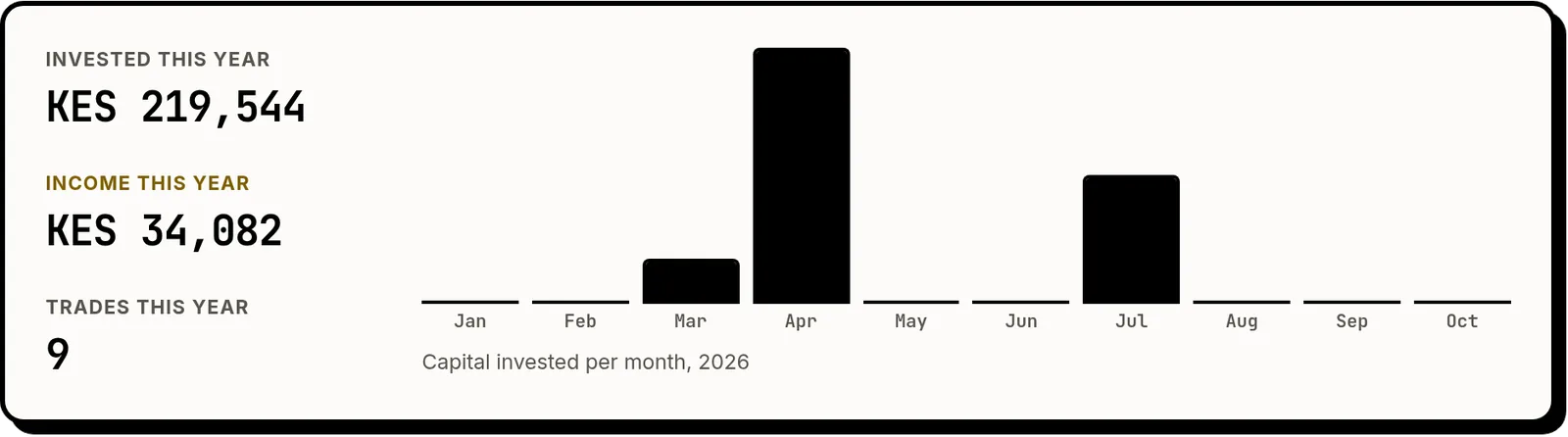
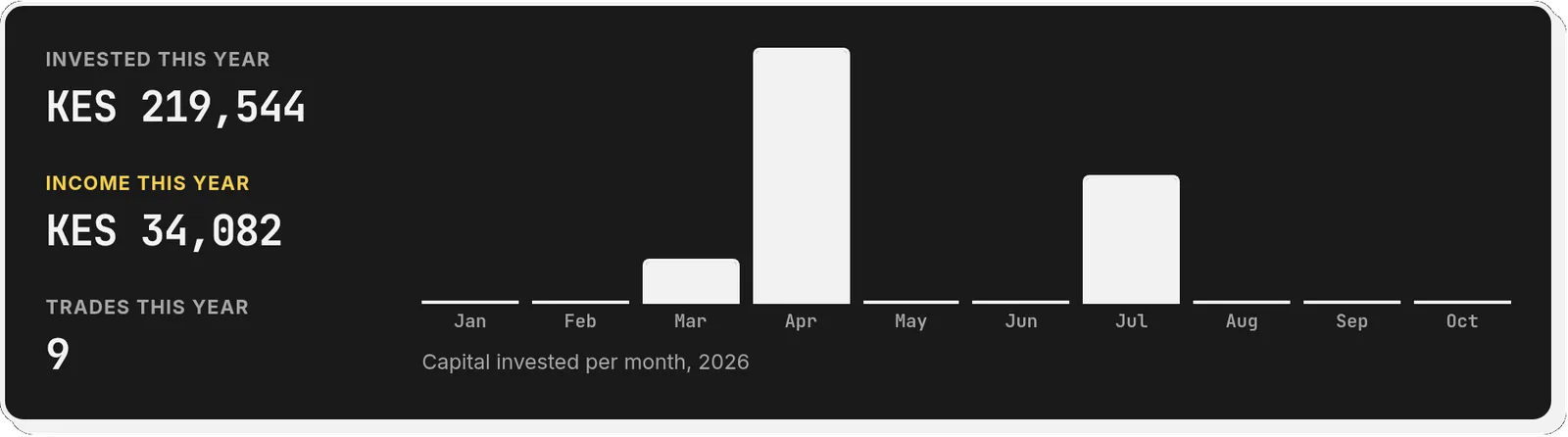
Clarifolio is built around this rhythm. The ledger gives you income by type and by holding, the reinvested and withdrawn split, realized gains, and upcoming maturities. Pro adds a Year in Review summary — capital invested, income received, and trades made this year, with a month-by-month chart of what you invested — and savings goals with progress tracking. See pricing.
Frequently asked questions
How often should a long-term investor review their portfolio?
Once a year is enough for most long-term investors, with a quick check when something significant happens, such as a bond maturing. Frequent reviews tend to encourage reacting to short-term price moves.
What should an annual portfolio review include?
Capital invested, income received by type, how much income was reinvested or withdrawn, realized gains and losses, upcoming maturities, whether the asset mix still matches your plan, and intentions for the coming year.
How long does an annual portfolio review take?
With a complete record, an afternoon. Most of the time goes into filling gaps in the record, which is why logging trades and income as they happen pays off.