Dividend Yield on Cost — What It Tells You, and What It Doesn't
Yield on cost compares the dividends a holding pays today with what you originally paid for it. How to calculate it, a worked example, and why it shouldn't decide whether you sell.
Yield on cost is one of the most satisfying numbers in dividend investing, and one of the most misused. It answers a narrow question well: how much income is my original investment producing now?
The formula
Yield on cost = annual dividends per share ÷ your average cost per share
Compare it with the ordinary dividend yield you see quoted:
Current yield = annual dividends per share ÷ today's share price
The only difference is the denominator. Current yield uses the market price, so it's the same for everyone. Yield on cost uses your price, so it's personal to you.
A worked example
You bought 200 shares of a company over two purchases, for a total of 5,000 including brokerage fees. Your average cost is 25 per share.
Several years later the company pays 1.50 per share a year in dividends, and the shares trade at 40.
- Yield on cost: 1.50 ÷ 25 = 6.0%
- Current yield: 1.50 ÷ 40 = 3.75%
Both are correct. The 6% tells you your original 5,000 now produces 300 a year. The 3.75% tells you what someone buying today would earn.
Use your real cost, fees included
Your average cost should include everything you paid to acquire the shares — brokerage commission and levies, not just the quoted price — and should be a weighted average across all your purchases. Weighted average cost basis explains the calculation, including what happens after a partial sale.
If you reinvest dividends into more shares, those purchases raise your share count and your total cost. Your yield on cost then reflects the blended price of everything you hold.
What yield on cost is good for
- Seeing dividend growth on your own capital. A rising yield on cost means the company has raised its payout since you bought.
- Motivation for patience. It makes visible why holding a growing dividend payer for a long time can matter more than the starting yield.
- Comparing your own holdings bought at different times, as a record of how each has rewarded you.
What it isn't good for
Deciding whether to keep a holding. The money tied up in a position is worth what the market would pay for it today, not what you paid years ago. If you sold at 40 and bought something else yielding 5%, you'd earn more income than the 3.75% you're effectively earning now — even though your yield on cost reads 6%. For hold-or-sell decisions, current yield, total return, and the business itself matter; yield on cost does not.
Calculating it from your records
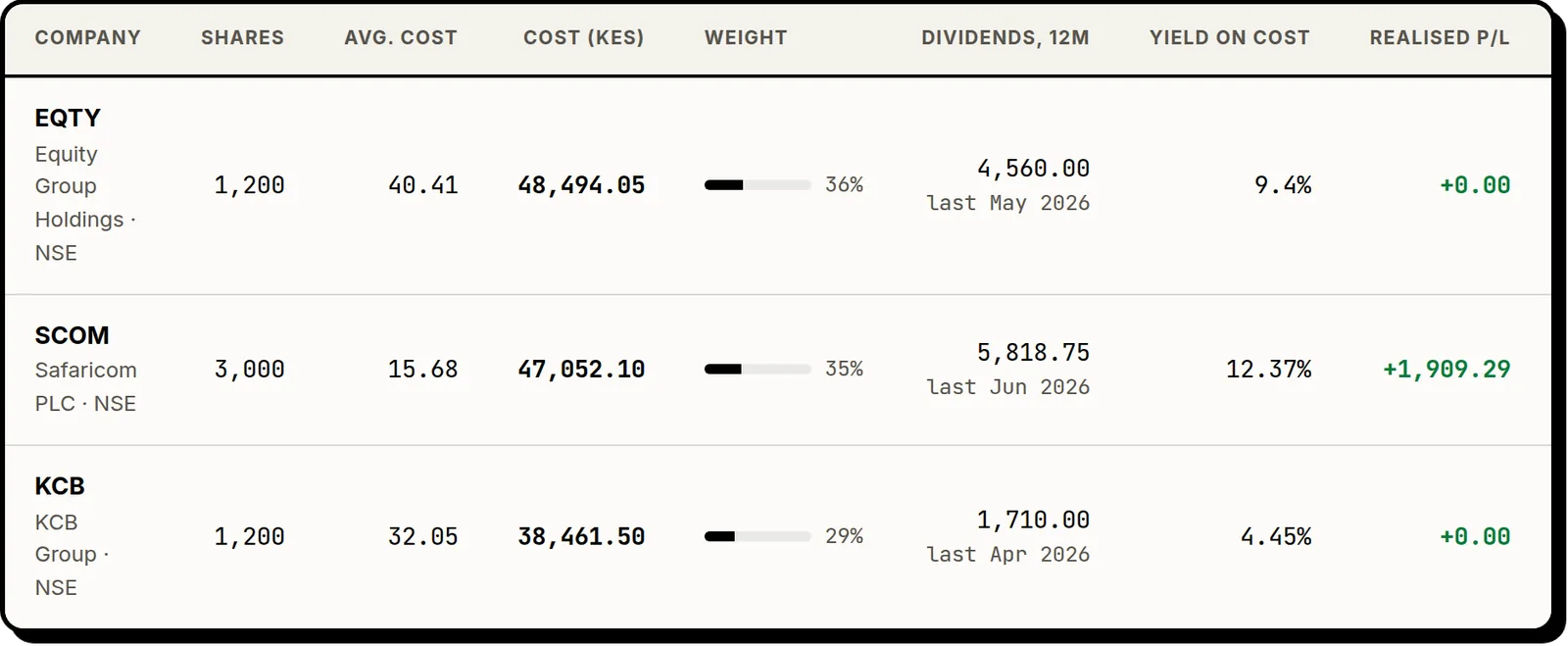
You need two numbers per holding: the dividends it paid over the last twelve months (from your income log) and your average cost per share (from your trade history). In Clarifolio both come from what you've recorded — the income log for each holding, and the average cost shown on the Shares page, which works out yield on cost for you.
Frequently asked questions
How do you calculate dividend yield on cost?
Divide the annual dividends per share by your average cost per share, including fees. For example, 1.50 of annual dividends on an average cost of 25 is a 6% yield on cost.
What is the difference between yield on cost and dividend yield?
Dividend yield divides annual dividends by today's share price; yield on cost divides them by the price you paid. Dividend yield is the same for every investor; yield on cost is personal.
Is a high yield on cost a reason to keep a stock?
No. Yield on cost reflects past decisions. Whether to hold depends on what the investment is worth today and what else that money could earn, which current yield and total return describe better.