Reinvested vs. Withdrawn Dividends — Why the Split Is Worth Recording
What you do with each dividend shapes your portfolio as much as which stocks you own. How to think about reinvesting versus withdrawing, and why recording the decision every time pays off.
Every dividend arrives with a decision attached, whether you make it deliberately or not: put it back to work, or take it out. Over a decade, that decision repeated a few dozen times shapes a portfolio as much as the stocks themselves.
The two options
Reinvesting means using the dividend to buy more of an investment — the same company (directly, or through a dividend reinvestment plan where one is offered) or something else. Your capital grows, and next year's dividends are paid on more shares.
Withdrawing means the cash leaves the portfolio: it covers living costs, pays down debt, or funds something else. Your income is real and spendable, and your invested capital stays where it was.
Neither is better in the abstract. Someone building a portfolio usually reinvests most of it; someone living from their portfolio withdraws most of it. Many people do some of each.
Why recording the split matters
Without a record, the decision blurs. Dividends land in a brokerage or bank account, sit for a while, and get spent or invested along with everything else. A year later it's hard to say how much of your income actually compounded.
Marking every payment as reinvested or withdrawn when it arrives gives you three things:
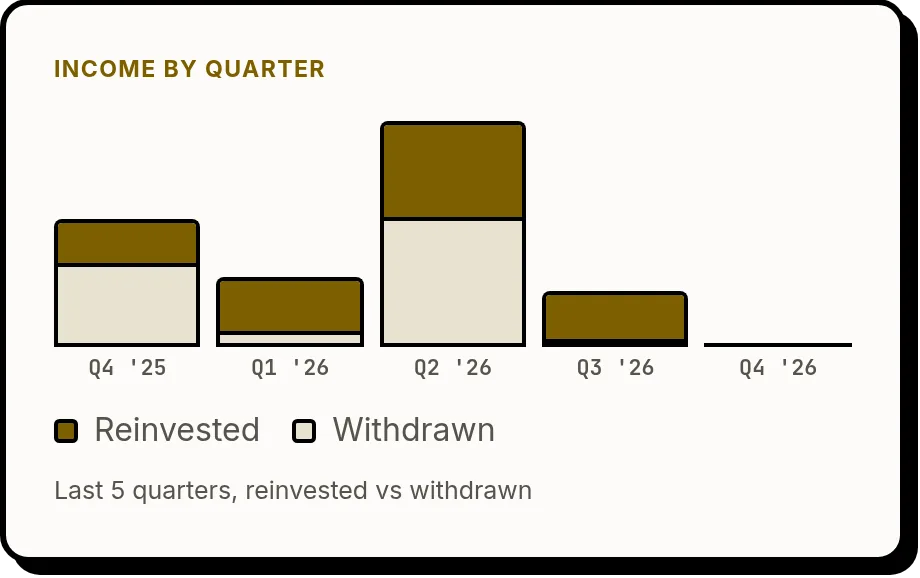
- An honest compounding figure. Total income tells you what the portfolio paid; reinvested income tells you how much of it went back to work.
- A check on your plan. If you meant to reinvest everything until a certain age, the record shows whether you did.
- A clearer view of your own contributions. Growth that came from reinvested dividends is different from growth that came from new money you added, and it's useful to know which is which.
Partial reinvestment
You don't have to choose all or nothing. A common pattern is to reinvest a fixed share — say, three quarters — and withdraw the rest as a small, regular reward. In Clarifolio each dividend and bond coupon records a reinvested amount, which can be the full payment, part of it, or none; the remainder counts as withdrawn.
What about Treasury bills?
T-bills don't pay periodic income — their return arrives once, at maturity. If you buy a new bill with the proceeds, that's a new purchase rather than a "reinvested" payment, so in Clarifolio T-bill discount income is always counted as withdrawn. See how T-bill discount income works.
Reviewing it once a year
Once a year, look at three numbers for the portfolio: total income, the amount reinvested, and the amount withdrawn. They tell you more about your progress than a daily price chart. The annual portfolio review checklist puts them in context.
Frequently asked questions
Should I reinvest my dividends or take them as cash?
It depends on your stage and goals. Investors still building a portfolio usually reinvest most dividends so they compound; investors living on portfolio income usually withdraw them. Many people reinvest part and withdraw part.
Why track reinvested dividends separately?
Because it shows how much of your income actually compounded. Total income alone doesn't tell you whether the cash went back into the market or was spent.
Can I reinvest only part of a dividend?
Yes. You can reinvest any portion, and in Clarifolio each dividend records the reinvested amount, with the remainder counted as withdrawn.