Tracking an NSE Portfolio — Shares, Dividends, T-Bills and Bonds in One Place
A ledger for investors on the Nairobi Securities Exchange — record share purchases with brokerage fees and levies, log dividends as they arrive, and keep CBK Treasury bills and bonds in the same place.
Investing in Kenya often means records in several places at once: a stockbroker's contract notes for shares on the Nairobi Securities Exchange (NSE), a CDS account statement, dividend payments arriving by bank transfer or M-Pesa, and Treasury bills and bonds bought through the Central Bank of Kenya. Clarifolio puts all of it in one ledger, in Kenyan Shillings or any other currency you prefer.
Shares, with the real cost of each trade
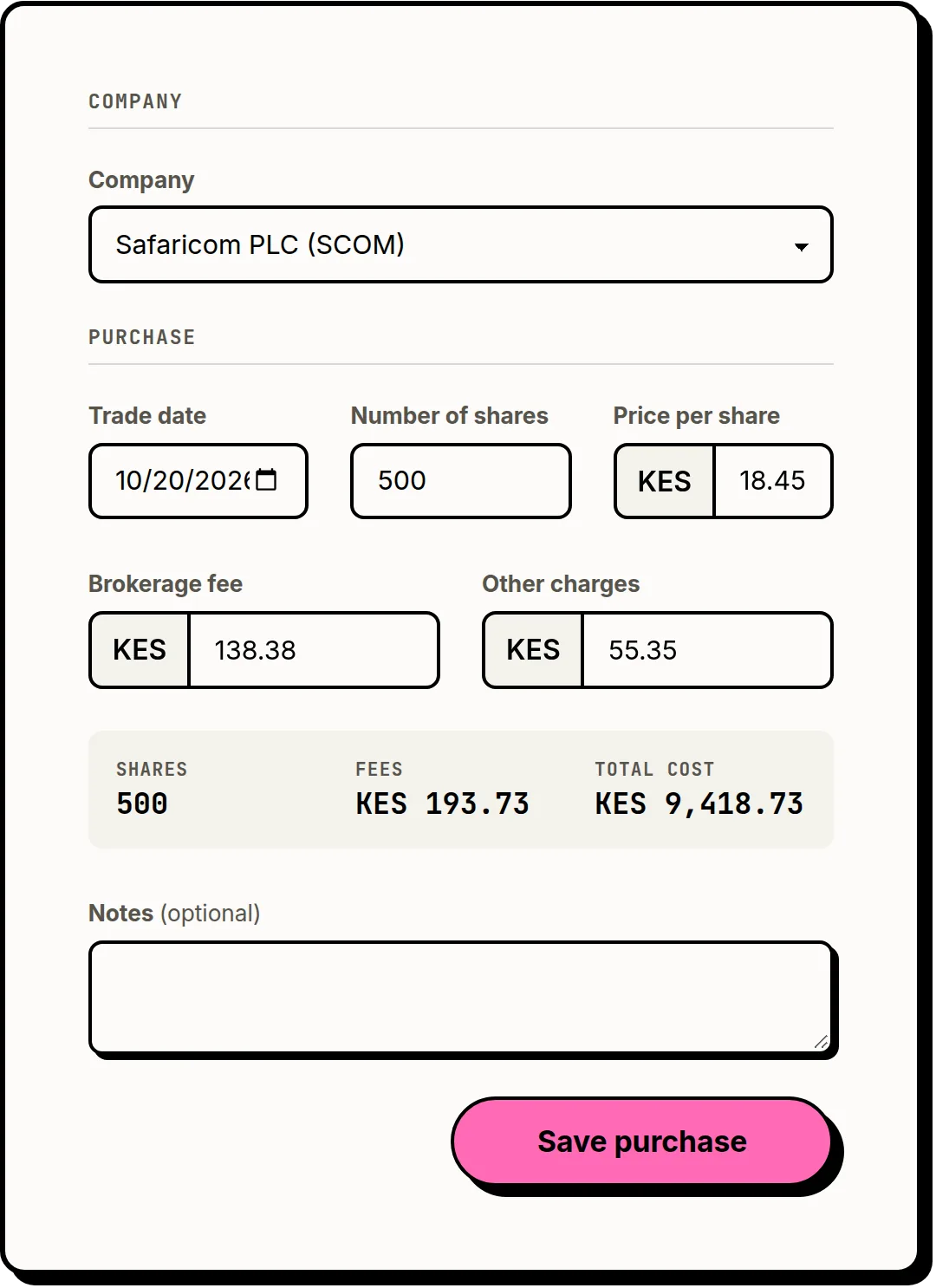
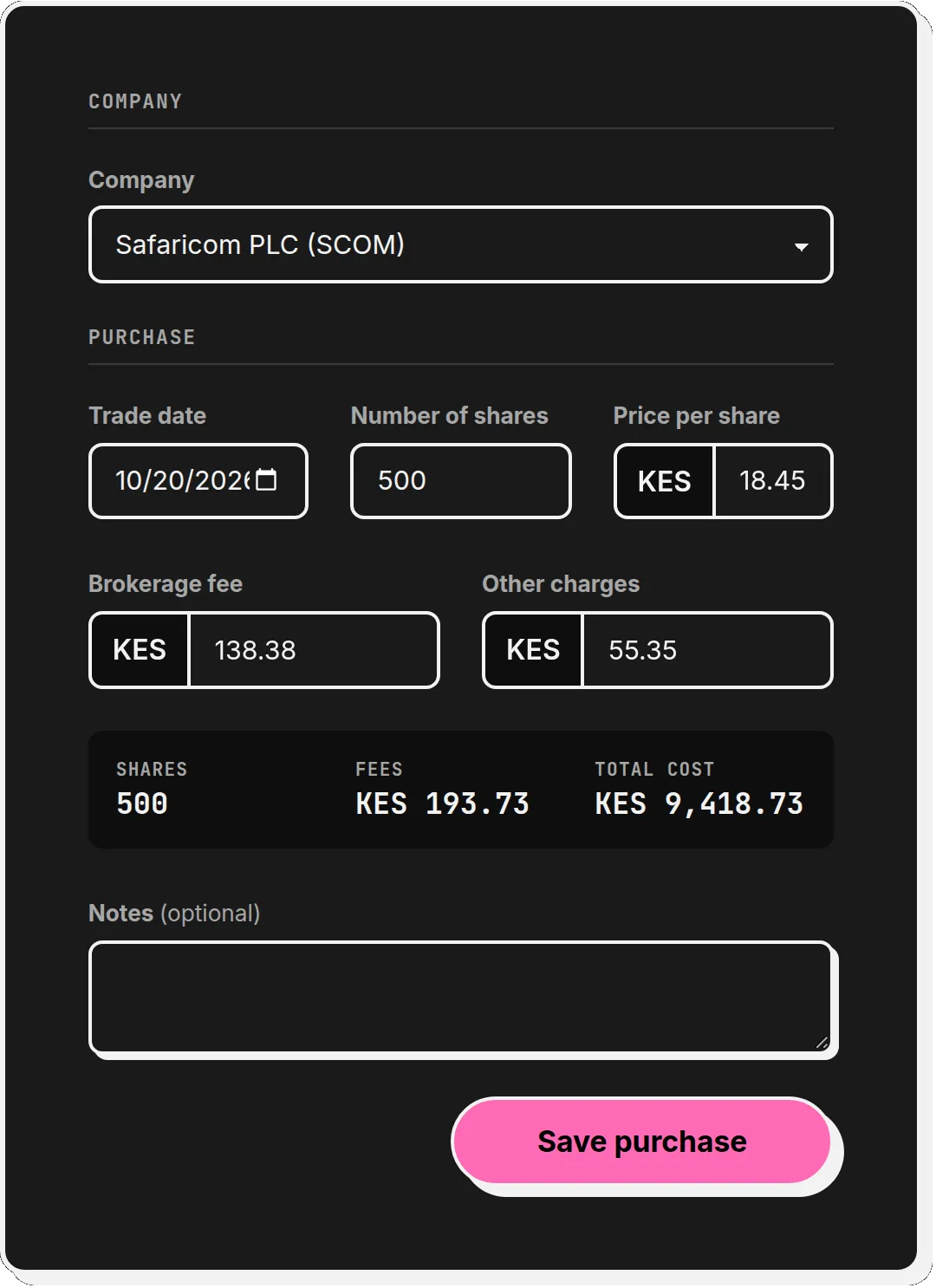
When you buy shares on the NSE, the price per share is only part of what you pay. Brokerage commission and statutory levies are added on top. Clarifolio records each trade with:
- Quantity and price per share
- Brokerage fee — your broker's commission
- Other charges — levies and fees itemised on your contract note
All of it goes into your cost basis, so your break-even price reflects what you actually paid, not just the quoted price. Weighted average cost basis explains how that's calculated across several purchases.
Dividends as they land
NSE-listed companies typically pay interim and final dividends. Log each one when the money arrives, with the amount per share and the total received, and mark how much you reinvested. If withholding tax was deducted, record what you actually received and note the deduction. Over a few years the log shows which holdings are really paying you, and how consistently.
Treasury bills and bonds from the CBK
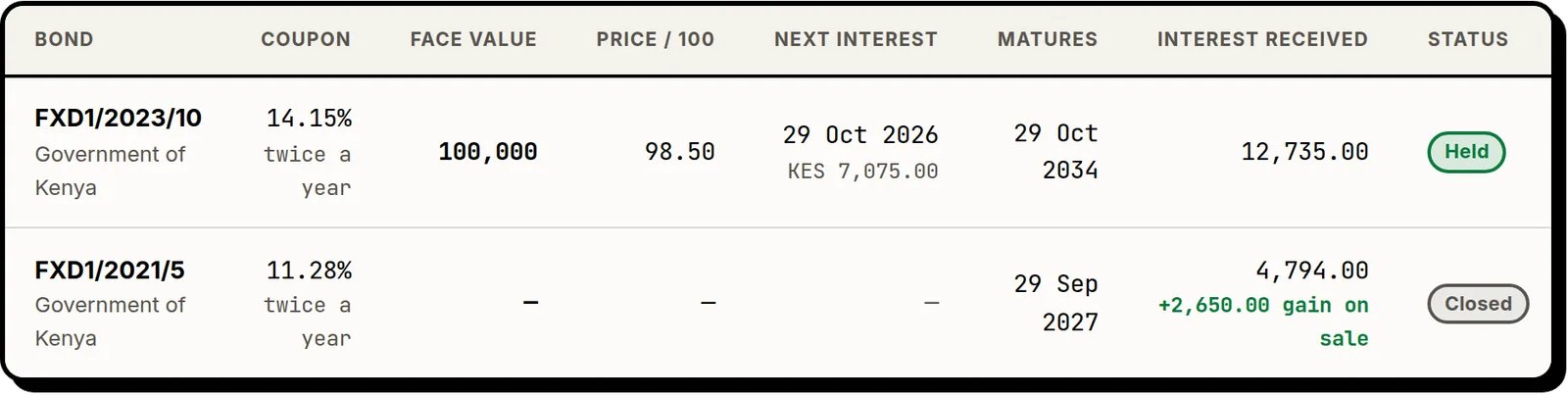
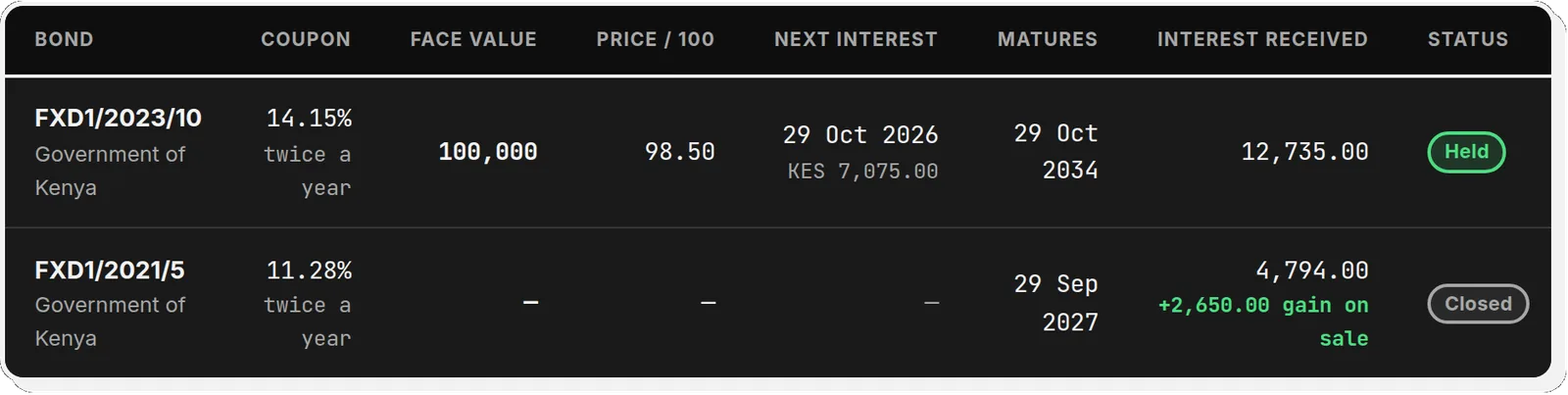
Kenyan government securities sit naturally alongside your shares under a "Government of Kenya" issuer:
- T-bills (91-, 182- and 364-day) with their discount rate and maturity date
- Treasury bonds with their coupon rate, tenor, and payment frequency
Coupon interest and T-bill discount income are logged as income, so the yearly total covers everything the portfolio paid, not just dividends. See tracking T-bills and bonds.
Why there are no live prices
Clarifolio deliberately doesn't show share prices. A price feed that silently goes stale shows a confident number that is wrong, and that's worse than showing none. What Clarifolio shows instead — cost basis, break-even price, realized gains, and income — comes straight from your own records and is always accurate. For today's prices, your broker's app or the NSE's own site is the right source.
Built for reviewing, not watching
Most NSE investors are long-term holders. Clarifolio is designed for that: log a trade when you make it, log a dividend when it lands, and review the year in one sitting rather than every morning. The annual review checklist is a good place to start.
Frequently asked questions
Can I track Nairobi Securities Exchange shares in Clarifolio?
Yes. Add each NSE-listed company as an issuer with its ticker, then record your trades and dividends against it. Clarifolio isn't limited to the NSE, so holdings on other exchanges can sit in the same ledger.
Can I include brokerage fees and levies in my cost?
Yes. Each trade records a brokerage fee and other charges separately, and both are included in your cost basis and break-even price.
Can I track CBK Treasury bills and bonds?
Yes. T-bills and Treasury bonds are recorded under a government issuer with their rate, tenor, and maturity date, and their interest or discount income is logged as it's received.
Does Clarifolio show live NSE prices?
No. It shows cost basis, break-even price, realized gains, and income from your own records, and deliberately doesn't display market prices.