Track Treasury Bills and Government Bonds Alongside Your Shares
Record T-bills and bonds with their tenor, rate, and maturity date, log coupon interest and discount income, and see what's maturing next — in the same ledger as your stocks.
Government securities are often the steadiest part of a portfolio and the worst-tracked. Shares show up in a broker app; T-bills and bonds tend to live in a central bank portal, an email confirmation, and a spreadsheet you update when you remember. Clarifolio keeps them in the same ledger as your equities, with the fields that actually matter for fixed income.
Before you buy, the free T-bill calculator and bond calculator show what a bill or bond will pay you after tax.
What you record for each security
Under a government (or corporate) issuer, you add the specific security you bought:
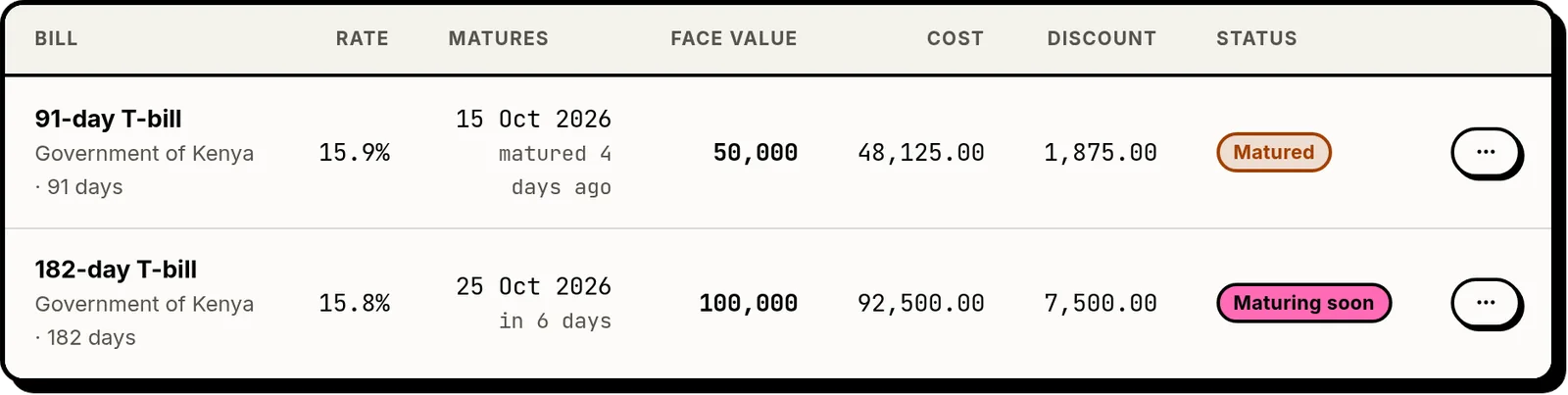
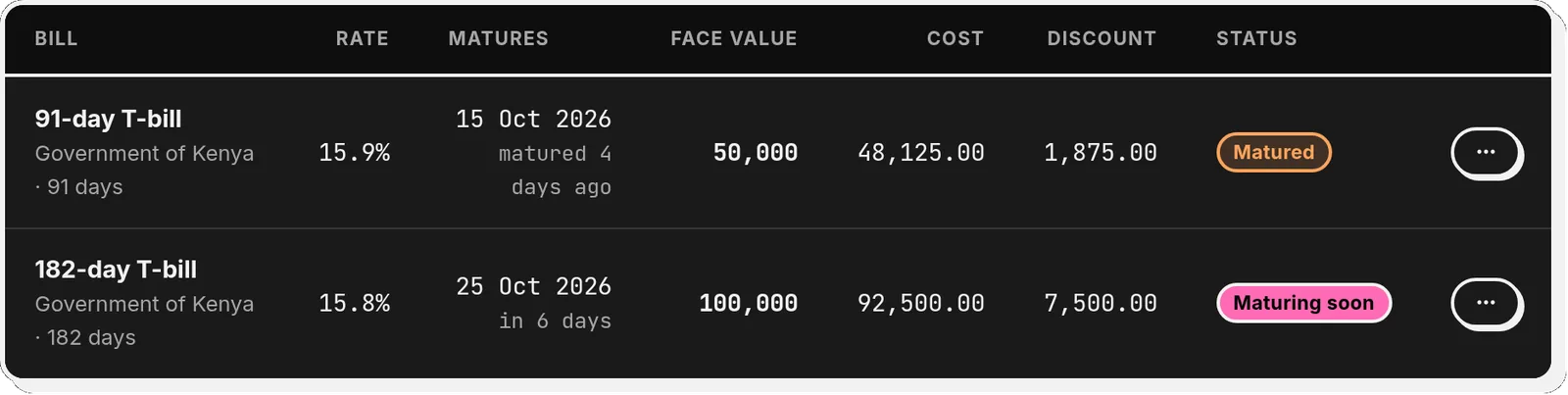
- Treasury bills — tenor in days, discount rate, issue date, and maturity date.
- Bonds — coupon rate, tenor in years, payment frequency (annual, semi-annual, or quarterly), issue date, and maturity date.
Then you record trades against it: the purchase, and a redemption when it matures and the principal comes back.
Income, recorded as it happens
- Coupon interest on a bond is logged each time it's paid, and can be marked reinvested or withdrawn just like a dividend.
- Discount income on a T-bill is logged at maturity — it's the difference between the price you paid and the face value you received. If you roll the proceeds into a new bill, that's recorded as a new purchase rather than as "reinvested" income, which keeps each bill's return clean. How T-bill discount income works walks through the arithmetic.
What's maturing next
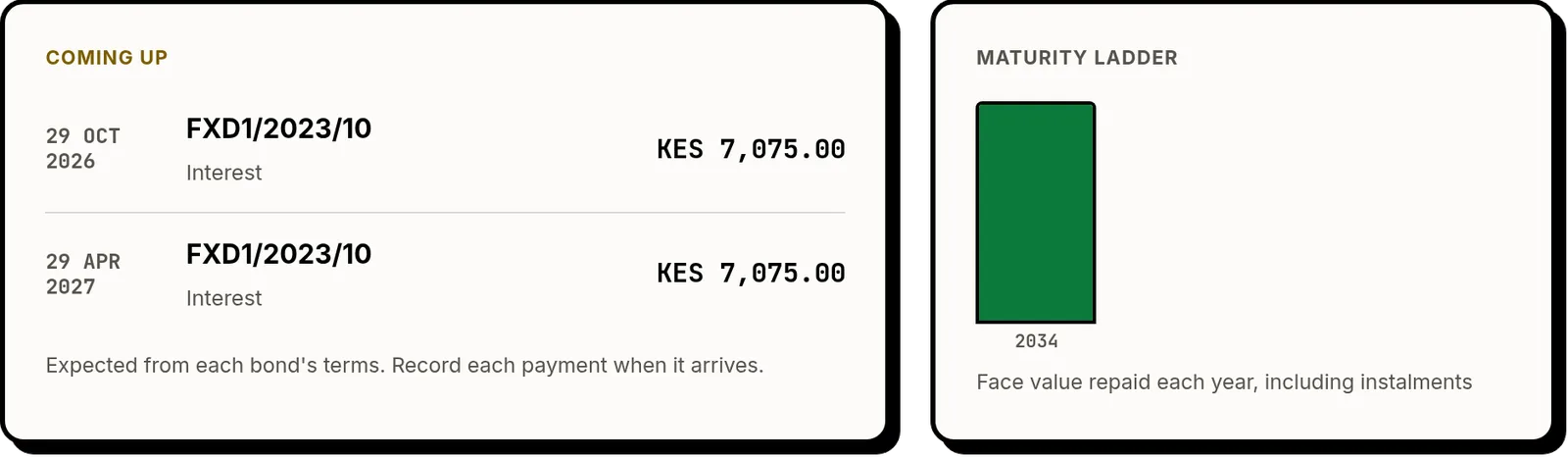
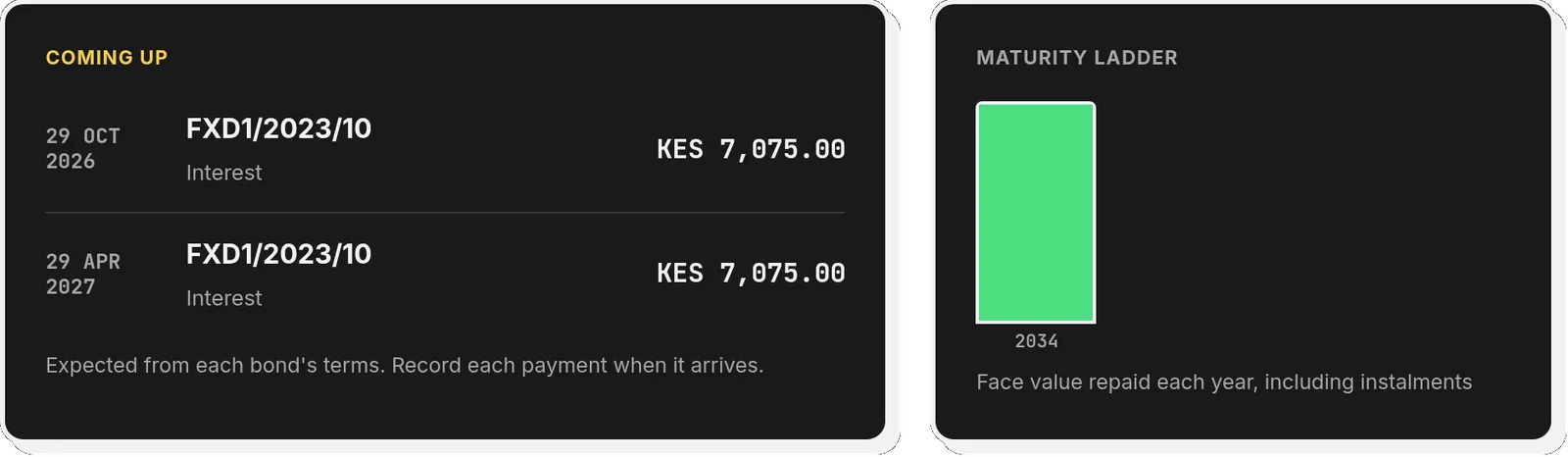
Because every bill and bond has a maturity date, the portfolio view shows what's coming due. That's the practical question for anyone running a ladder of bills: what matures this month, and how much cash will it free up?
A complete picture, without live prices
Clarifolio shows cost basis, realized gains, and income — numbers that come straight from your own records and are always correct. It deliberately doesn't show a live market value for bonds or bills: secondary-market prices for government securities are hard to source reliably, and an estimate that looks precise but isn't would be worse than no number at all.
Who this is for
Anyone who buys government securities directly — through a central bank platform, a primary auction, or a broker — and wants them recorded next to their shares, for example investors in Kenyan Treasury bills and bonds, US T-bills, or UK gilts. Clarifolio isn't tied to one country: the issuer is whatever government or company issued the security.
Frequently asked questions
Can I track Treasury bills in Clarifolio?
Yes. T-bills are recorded with their tenor in days, discount rate, issue date, and maturity date, and their discount income is logged at maturity.
Does Clarifolio track bond coupon payments?
Yes. Each coupon payment is logged as interest income against the bond, with the option to mark it reinvested or withdrawn.
Can I hold bonds and stocks in the same portfolio?
Yes. Equities, bonds, and T-bills all sit in the same ledger under their issuers, and their income rolls up into one total.
Does Clarifolio show the market value of my bonds?
No. It shows cost basis, realized gains, and income, which come directly from your records. It doesn't estimate secondary-market prices for bonds or bills.